About 3-Stage Sampling System
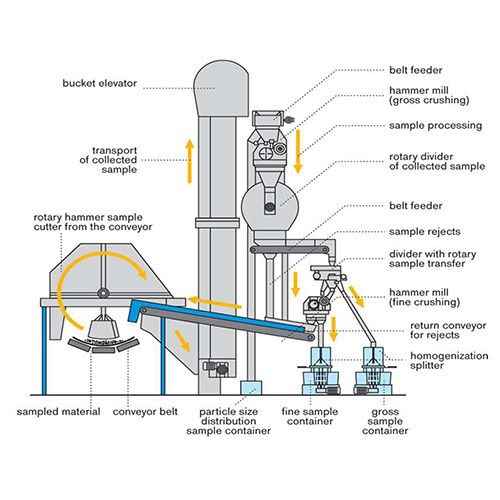
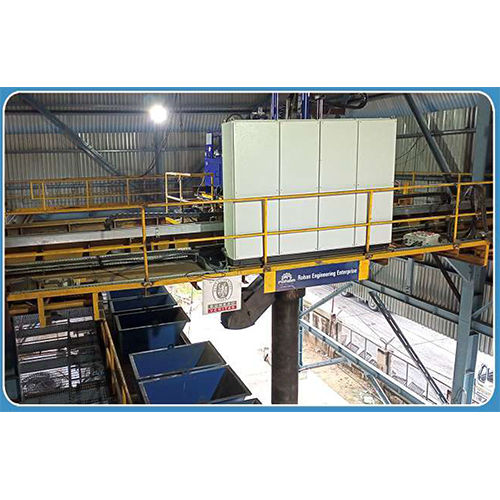
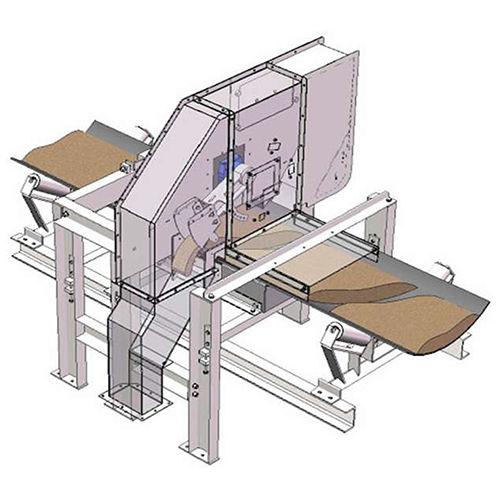
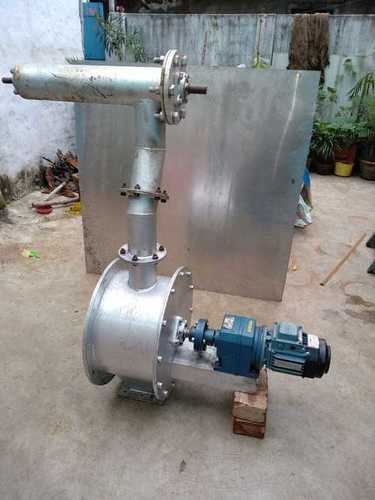
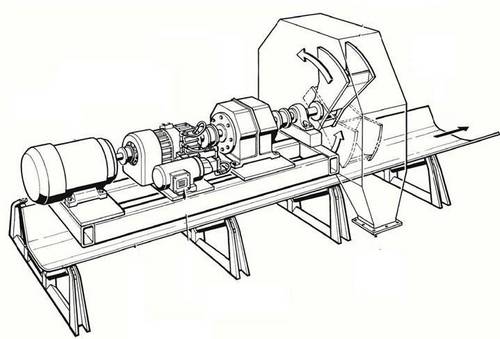
The 3-Stage Sampling System is typically utilised with the Conventional Cross Stream Sampler which produces a very large primary sample increment and requires an additional stage of processing to reduce the sample to a manageable size. This arrangement includes a sealed primary sample receiving hopper, primary belt feeder, secondary sampler, secondary feeder, sample crusher, tertiary sampler, sample collector and reject handling system.
The primary belt feeder feeds the primary sample increments to the secondary sampler. The secondary sample increments are fed via the secondary feeder to the sample crusher where the sample increments are typically reduced to a 4-mesh product. The product from the crusher is gravity fed to a tertiary sampler which takes a tertiary increment. The tertiary increment is gravity fed to a save sample container. The reject handling system returns the reject from the secondary sampler and tertiary sampler to the main conveyor for most installations.
Enhanced Sampling AccuracyWith an impressive accuracy rate of 0.5%, this 3-Stage Sampling System substantially reduces sampling errors, supporting high-quality data collection across industrial applications. The system is tailored for handling powders, granules, and pellets, making it ideal for varied sectors ranging from food to chemicals.
Superior Material Compatibility and DurabilityConstructed from corrosion-resistant SS304/SS316 stainless steel, the system withstands tough industrial environments and ensures long operational life. Designed for ambient humidity between 10% to 85% RH and operating in temperatures from -10C to +60C, it offers reliable performance in challenging settings.
Flexible Operation and AutomationAvailable in both stationary and mobile configurations, the system combines semi-automatic or fully automatic processes controlled by a PLC. Its digital touch panel simplifies monitoring and operation, while safety interlocks and dustproof enclosures enhance user safety and ease of maintenance.
FAQ's of 3-Stage Sampling System:
Q: How does the 3-Stage Sampling System ensure high accuracy in sampling?
A: The system employs a multi-stage, PLC-controlled process with a precision conveyor belt and 360-degree sampling arm, guaranteeing consistent and repeatable sample extraction with an accuracy of 0.5% for various bulk materials.
Q: What types of materials can be sampled using this system?
A: This equipment is compatible with powders, granules, and pellets, making it suitable for industries such as pharmaceuticals, food processing, chemicals, and mining.
Q: When is it advisable to use the mobile or stationary mounting option?
A: Choose the mobile version for workplaces requiring frequent relocation or sampling at different points, and the stationary type for fixed installations, such as production lines or designated sampling stations.
Q: Where can the 3-Stage Sampling System be installed within an industrial facility?
A: It can be integrated into production lines, warehouses, or material handling areas, thanks to its flexible design and customizable belt length that adapts to specific plant layouts.
Q: What is the process for collecting samples using this system?
A: Samples are collected via a programmable conveyor belt mechanism, which transports the material to the sampling arm. The arm, rotating at 360 degrees, ensures representative sampling before depositing the sample into containers with 5-20 L capacity.
Q: How is the equipment operated and monitored?
A: Operation is managed by a digital touch panel with PLC control, allowing users to set parameters, monitor sample throughput, and receive operational feedback. Automated safety interlocks and a dustproof enclosure ensure secure and continuous functioning.
Q: What are the main benefits of using this 3-Stage Sampling System in industrial applications?
A: Key benefits include high sampling accuracy, robust durability, automated and user-friendly operation, compatibility with diverse materials, enhanced safety features, and the ability to process up to 150 samples per hour efficiently.





 Send Inquiry


 Send Inquiry


 English
 Spanish
 French
 German
 Italian
 Chinese (Simplified)
 Japanese
 Korean
 Arabic
 Portuguese